
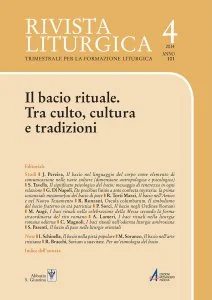
Descrizione
R. Ronzani pp. 721-736
Oscula columbarum. Il simbolismo del bacio fraterno in età patristica
Già Erodoto scriveva che i Persiani appartenenti alla stessa condizione sociale avevano la consuetudine di salutarsi con un bacio sulle labbra, segno di pari dignità. Tale segno apparteneva da sempre anche alla tradizione cristiana e sovente era definito sacramentum, perché segno della pari dignità esistente tra i fratelli di Cristo, figli dell’unico Padre celeste. Per i Padri della Chiesa l’osculum indicava fraternità e comunione e in questo senso è inteso nella letteratura subapostolica, in quella apologetica e in autori cristiani come Giustino, Atenagora, Clemente di Alessandria, Origene e Tertulliano. Nell’alveo della grande tradizione patristica si nota talvolta una progressiva attenuazione del rapporto tra il segno e la vita, specie nella catechesi mistagogica. Agostino non tralascia mai di rilevare il legame inscindibile tra segno e realtà che esso manifesta, tra osculum rituale e vita del fedele. È in questo contesto che fa la sua comparsa il tema del bacio fraterno come «bacio della colomba», vale a dire come segno di semplicità e di fervore al tempo stesso che, per opera dello Spirito santo, produce frutti di unità. La tradizione patristica è stata ben sintetizzata da Isidoro verso la fine dell’evo patristico.
Oscula columbarum. The symbolism of brotherly kiss in the Patristic age.
Already Herodotus wrote that Persians belonging to the same social class are accustomed to greet themselves with a kiss on the lips, as a sign of an equal dignity. This sign was also always belonging to the Christian tradition and was often defined a sacramentum, because it was sign o the equal dignity that exists among the brethren in Christ, who are sons of the one heavenly Father. For the Fathers of the Church the osculum pointed out fraternity and communion, and in this sense it is understood in the sub apostolic literature, in the apologetic one and in Christian authors as Justin, Athenagoras, Clement of Alexandria, Origen and Tertullian. Within the great river of the Patristic tradition we observe sometimes a growing attenuation of the link between sign and life, particularly in the mystagogic catechesis. Augustin does not forget to stress the indissoluble link between sign and reality that it reveals, between ritual osculum and faithful’s life. In this context it appears the item of brotherly kiss as «kiss of the dove», i.e. as sign of simplicity and at the same time of fervour that, by means of the Holy Spirit, produces fruits of unity. The Patristic tradition has been well recapitulated by Isidore of Seville towards the end of the Patristic age.
Recensioni
Ancora non ci sono recensioni.